Mi vida · Life story
Life Story
“In 1948 I was born in Vigo (a city of 700,000 in a province of the region of Galicia) in Catholic Spain…” So begins the biography he wrote in 2002. This page follows his own year-by-year timeline, “Who is JX,” and the biographies on his campaign and career sites.
Vigo: childhood and first jobs (1948–1969)
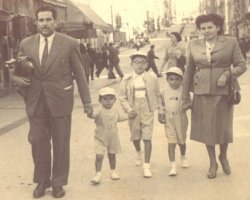
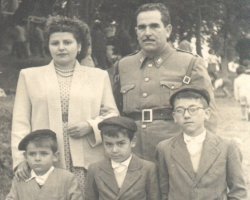
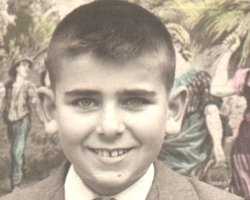
He was born on November 10, 1948, on the calle Irmandiños in Vigo. His father, José, was a policeman (Policía Armada) who had been wounded several times as a soldier, and later a sergeant, in the Spanish Civil War. After retiring he supervised security guards for a shipbuilding company until the 1980s. José died in 1992, at 82. His mother, Amadora, kept the home. Juan was the third of five children: older brothers José Amador and Elías, a younger brother, Bernardo, and a sister, María Rosa. In his words, “I am the only one in the family who has left Spain for good.”
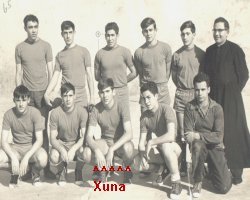
In 1962, at 13, he won a Citroën scholarship after a very selective exam, with small grants from the Caja de Ahorros de Vigo, and studied at the Salesian trade school and the Colegio Hogar of the Caja de Ahorros. In 1965 he earned an associate degree in mechanical/industrial engineering from the Escuela de Peritos in Vigo, summa cum laude. He noted that the director told him it was the highest grade ever given.
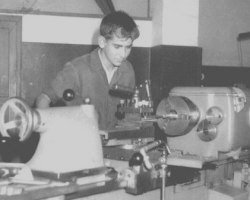
From 1966 he worked for three years at Citroën Hispania in Vigo, first as a plant-manager apprentice and then in drafting, on the lathe and milling machine, and in the chemical labs. In 1968 he lived in Paris. That year he received a scholarship from the Fundación Pedro Barrié de la Maza (Conde de Fenosa), and in 1969 he began engineering studies at the ETSII in Barcelona, since “back then, no school of ‘Ingenieros Superiores’ in home region, Galicia.”
Barcelona, the Army, and Puerto Rico (1969–1974)
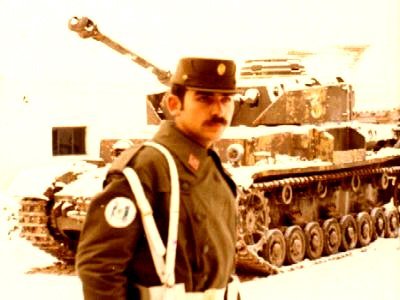
In Barcelona he met Olga Cintrón, a Puerto Rican who was studying medicine in Spain. From September 1970 to December 1971 he did his compulsory service in the Spanish Army, Military Police, in Madrid, after boot camp in Cáceres. He and Olga married in San Juan in 1971, while he was on leave.
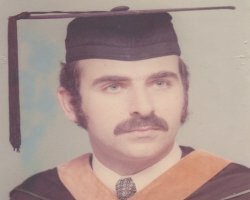
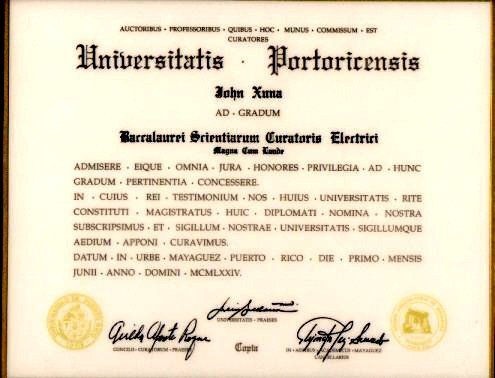
After his honorable discharge they moved to Puerto Rico in 1972. He restarted his engineering studies at the University of Puerto Rico, Mayagüez, using proficiency exams to shorten them, and finished a five-year program in four semesters and two summers. In 1973, as a student, he worked in laser research at the Nuclear Center of Puerto Rico. In June 1974 he graduated as an electrical engineer (BSEE), magna cum laude. Their first son, Ryan Carlo, was born three months before graduation.
New York: radars and airlines (1974–1980)
The month after graduation the family moved to Suffolk County, Long Island. He worked for Airborne Instruments Laboratory (AIL), a NASA and defense subcontractor, installing secondary surveillance radars in South America and training air-traffic controllers. His first long stay in Latin America was at Manaus, Brazil, in 1976. He became a U.S. citizen in 1976. In 1977 he was regional manager for the Middle East and West Africa for Databit. Tired of risky travel, he then joined British Airways in New York as a telecommunications officer.
In 1978 he registered his own company, Scientific Software, on Long Island. Commuting five hours a day and programming six more at night left little time for family or sleep, so he resigned from the airline, sold the house, and moved the family back to Puerto Rico.
Puerto Rico again: Scientific Software (1980–1986)
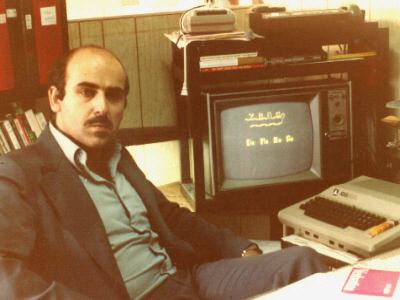
In January 1981 he opened Scientific Software in Old San Juan. There he wrote XUNA D.M.I.S. (1982), dairy-farm management software that he describes as a powerful database, “color, graphs, all crammed in 100 KB.” Eleven local newspaper articles, three farm magazines and three San Juan TV appearances covered it. For lack of venture capital he had to close the company in 1984.
His sons Jason Melvin (1981) and Kelvin Raymond (1982) were born in Puerto Rico. To make ends meet he became a full-time Professor of Computer Science at Inter American University in Caguas (1983), and he completed MBA coursework there in 1985. He then worked as a production manager at Columbia Data Products (Gurabo) and at Storage Technology (StorageTek) in Ponce. In 1986 he legally changed his name to John Xuna.
Colorado and Wisconsin (late 1980s–1994)
StorageTek transferred him to its headquarters in Louisville, Colorado, near Boulder, where he wrote critical test software. He earned a Master of Science in Telecommunications from the University of Colorado, Boulder, and later began Ph.D. coursework in computer science at Colorado State University in Fort Collins. In 1991–92 he left StorageTek to restart his farm-software venture in Two Rivers, Wisconsin, as Animal Science Software International. In his words, “those were hard times.” His first marriage ended in divorce in the early 1990s.
South Dakota, Minnesota and Kansas (1994–2000)
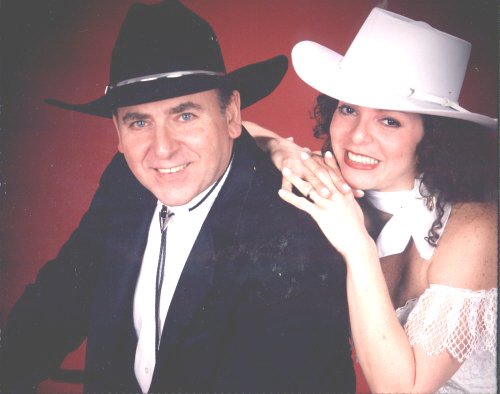
In early 1994 he accepted an executive position with LodgeNet Entertainment in Sioux Falls, South Dakota, and started its international operations. On one of his many trips he met Morgana “Mona” Aguiar, a painter from Rio de Janeiro, who was exhibiting her work on the Copacabana sidewalk. They married on New Year's Eve, 1996, and Mona exhibited at the Sioux Falls Civic Fine Arts Center in 1997.
From 1997 he worked with Independent Technologies (ITC) of Omaha, first as a freelance developer from the family's lakeshore home at Wall Lake, then as Director of Software. The work took the family to St. Cloud, Minnesota, where their daughter Alana Florida was born on Thanksgiving Day 1998, and then to Lenexa, Kansas, near Sprint's headquarters. In June 2000 he was promoted to Vice President of International Sales, and the family moved to Hillsboro Beach, Florida.
“I have resided 10 years in PR, 7 years in NY, 5 years in CO, 4 years in SD, 2 years in WI, 2 years in KS, 1 year in MN, and 2 years in FL. Plus I have visited another 31 American States.”
Florida, the campaign, and a year in Spain (2001–2005)
He resigned from ITC effective January 15, 2002, to run for the U.S. Congress as a political newcomer (see Public Service). His mother, Amadora, died in Vigo on October 15, 2002, in the last weeks of the campaign. He was out on the campaign trail on the day of her funeral, and wrote in his campaign diary: “Sorry for not being there! But I know you have always been proud of me!”
In 2003 the family moved to Cape Canaveral. At the end of September 2003, after 32 years in the United States, he returned to Spain with Mona and Alana, living in Vigo. They came back to the U.S. after 11 months, and in 2005 he moved to Okeechobee, Florida, with a new teaching certificate.
Teacher, professor and author (2005–2014)
From 2005 he taught math, physics and science in Florida schools. In 2008 he presented his geothermal research, ZUET, in Boston and at a Palm Beach County science symposium. In 2011 he shipped his car from Miami to Lima, Peru, and drove through South and Central America. He described it as “1 year travelling (6 mo. going, 6 mo. return). 1 year instructing.” In 2012 he was Professor of Physics at the Universidad Nacional de Asunción, Paraguay, and published The Ignorance of Faith in five languages. He returned to Florida in 2013 after a 10,000-mile round trip, and in 2014 taught physics at MOA (Marine Oceanographic Academy). See Teacher & Scientist.
Later years
In 2016 he ran again for Congress, in the Democratic primary for Florida's 18th District. His timeline also lists plans for further translations of his book and for a new book, on what he called “Quantum Relativity Theory.”
Timeline at a glance
- 1948 Born November 10 in Vigo, Galicia, Spain, as Modesto Álvarez-Vázquez.
- 1962 Citroën scholarship after a selective exam, with grants from the Caja de Ahorros de Vigo.
- 1965 Associate degree in mechanical engineering, Escuela de Peritos, Vigo, summa cum laude.
- 1966–68 Plant-manager apprentice, then drafting, lathe, milling and labs, at Citroën Hispania, Vigo.
- 1968 Barrié de la Maza (Conde de Fenosa) scholarship. Lives in Paris.
- 1969 Begins engineering studies at ETSII, Barcelona.
- 1970–71 Spanish Army, Military Police, Madrid. Marries Olga Cintrón in San Juan (1971).
- 1972 Moves to Puerto Rico and restarts engineering studies.
- 1973 As a student, laser research at the Nuclear Center of Puerto Rico.
- 1974 BSEE, University of Puerto Rico, Mayagüez, magna cum laude. Son Ryan Carlo born.
- 1975 Hired by Airborne Instruments Laboratory (AIL), Long Island, New York.
- 1976 Installs radars in Manaus, Brazil. Becomes a U.S. citizen.
- 1977 Regional manager, Middle East & West Africa, Databit. Then British Airways, New York.
- 1978 Registers Scientific Software on Long Island.
- 1979 Sends the U.S. Congress an article on peak oil.
- 1980 “3D-Graphics” program, copyrighted.
- 1981 Opens Scientific Software in Old San Juan. “Nucleolic Programming” paper, copyrighted. Son Jason Melvin born.
- 1982 XUNA D.M.I.S., copyrighted. Son Kelvin Raymond born.
- 1983 Full-time Professor of Computer Science, Inter American University, Caguas.
- 1984 Paper: “Marketing Analysis of the Dairy Industry in P.R.”
- 1985 MBA coursework (accounting), Inter American University.
- 1986 Legal name change to John Xuna.
- 1987 Board Test, System Test and Production Manager, StorageTek, Ponce, PR.
- 1988 Transferred to StorageTek headquarters, Louisville, Colorado.
- 1989 Founds DairySoft in Boulder, Colorado.
- 1990 “A Decade with Nucleolic Programming,” copyrighted.
- 1991 Manuscript “US Energy Policy: S.O.S. (Scared Ostrich Syndrome),” copyrighted.
- 1992 Founds Animal Science Software International, Two Rivers, Wisconsin.
- 1993 “DECADE D.M.I.S.,” written in C, copyrighted. M.S. in Telecommunications, University of Colorado.
- 1994 Joins LodgeNet Entertainment, Sioux Falls, South Dakota, and starts its international operations.
- 1996 Marries Morgana “Mona” Aguiar on New Year's Eve.
- 1998 Joins Independent Technologies (ITC). Daughter Alana Florida born.
- 1999 “SABIO: Searching for Answers in Biology,” a Prolog expert system (a work in progress).
- 2000 Builds an Oracle/C++ system for Sprint. Promoted to VP of International Sales. Moves to Florida.
- 2002 Candidate for the U.S. House, Florida District 22 (no party affiliation).
- 2003–04 Cape Canaveral, then 11 months in Vigo, Spain.
- 2005 Florida teaching certificate. Teaches science in Okeechobee.
- 2007 Publishes DoomedGlobe.com, on atmospheric CO2.
- 2008 Presents ZUET (geothermal energy) in Boston and at the Palm Beach County Preschool Science Symposium.
- 2011 Drives from Lima, Peru, through South and Central America.
- 2012 Professor of Physics, Universidad Nacional de Asunción, Paraguay. Publishes The Ignorance of Faith.
- 2013 Returns to Florida after a 10,000-mile round trip.
- 2014 Teaches physics at MOA (Marine Oceanographic Academy).
- 2016 Democratic primary candidate for the U.S. House, Florida District 18.
Some dates differ slightly between his own pages: for example, Scientific Software is dated 1978 or 1979, and the Colorado master's degree 1992, 1993 or 1995. This page follows his “Who is JX” timeline and his résumés. Sources: EHXS.com “Who is JX” (2014); xuna.com biography, “Juan… who?”, and campaign calendar (2002); XunaSoft.com “Pioneer” and “Plant Manager”; JXPE.com résumés; Faro de Vigo (January 31, 2002).